
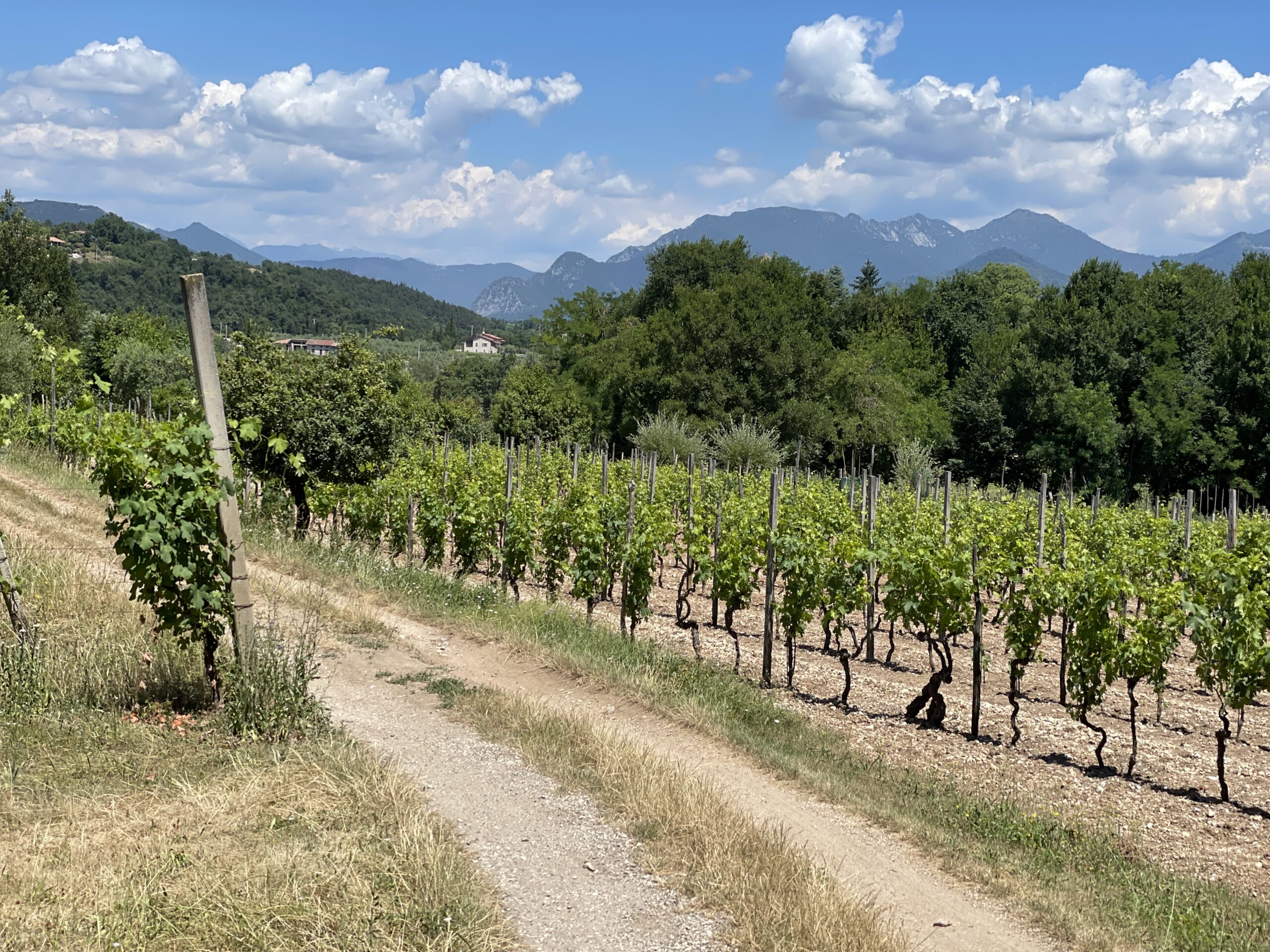
Lake Garda is celebrated for its landscapes, historic villages, and lively culture, but it is also a land of vineyards. For centuries, vines have grown along its shores and hills, drawing character from soils formed by glaciers and from a climate moderated by the lake itself. Wine is not simply a local product: it is a reflection of the territory, of the winds that cross it daily, and of a culture that places conviviality and refinement at its heart.
Exploring the wines of Lake Garda means travelling through three distinct areas, each with its own traditions and grape varieties: Lugana on the southern shores, Bardolino on the eastern hills of Verona, and Valtenesi on the western slopes of Brescia. Together they form a mosaic of styles that express the identity of Italy’s largest lake.
The Terroir and the Winds

The unique conditions of Lake Garda are the result of ancient geological forces and a climate that balances northern freshness with Mediterranean mildness. The soils, shaped by the retreat of glaciers, are rich in minerals and varied in texture—from clays and marls to morainic deposits. This diversity gives depth and complexity to the wines produced around the lake.
Equally decisive are the two winds that alternate over its waters. The Ora, a breeze rising from the south in the afternoon, brings warmth and gentle ventilation, while the Peler, blowing from the north in the early morning, cools the air and the soil. This rhythm favours slow and balanced ripening, preserving acidity and enhancing aromatic finesse. It also protects the vines from excessive humidity, reducing the need for chemical treatments. The result is a natural harmony that translates directly into freshness, minerality, and elegance in the glass.
A Journey Around the Lake Through Its Wines
Lugana DOC – The Southern Shore
Stretching between Lombardy and Veneto, Lugana DOC embraces towns such as Desenzano, Peschiera, Lonato, Sirmione, and Pozzolengo. Here the local grape Turbiana—long confused with Trebbiano but now recognised as an independent variety—produces wines of remarkable identity.
Lugana is known for its clarity and structure. Fresh citrus notes, delicate almond hints, and a marked minerality make it versatile at the table, particularly with lake fish and refined pasta dishes. While lively in its youth, Lugana also shows an unexpected ability to age: the best bottles reveal depth and complexity even after several years.
The Consorzio Tutela Lugana DOC promotes visits and tastings throughout the area, guiding travellers into cellars where tradition meets modern enology. Experiencing Lugana on its own soil is to understand why this white wine has achieved recognition far beyond Italy.
Bardolino DOC – The Eastern Hills of Verona
Moving east, the vineyards around the town of Bardolino open onto gentle hills overlooking the lake. This is one of the most historic viticultural areas of northern Italy, with references dating back to Roman times. Today its wines are protected under the Denominazione di Origine Controllata (DOC), covering 16 municipalities in Verona province.
Bardolino is produced mainly from Corvina, Rondinella, and Molinara, native grapes that give wines of light body, fragrant fruit, and immediate drinkability. It is a wine designed for conviviality: lively, fresh, and best enjoyed young.
The family of Bardolino wines is broad:
- Bardolino Classico, from the historical heart of the denomination.
- Chiaretto di Bardolino, a rosé style with a tradition that goes back over a century.
- Bardolino Superiore, a version with longer aging and greater depth.
Visiting wineries in Bardolino means discovering this variety of expressions, often accompanied by panoramic views over the lake, olive groves, and cypress-lined roads that give the area its unmistakable charm.
Valtenesi Chiaretto – The Western Hills of Brescia
Crossing to the Brescia side, the Valtenesi region extends from Padenghe to Manerba, Polpenazze, and Moniga. Here the native Groppello grape is central, often blended with Marzemino, Sangiovese, and Barbera.
The result is Valtenesi Chiaretto, a rosé wine with a pale colour that ranges from cherry to peach, and aromas of wild berries, citrus, and flowers. On the palate it is lively, mineral, and balanced, with a faint saline trace that recalls the proximity of the lake.
Moniga del Garda holds a special place in this story. It is considered the birthplace of Chiaretto: in 1896, senator Pompeo Molmenti defined here the method of rosé vinification that shaped the modern identity of Garda’s pink wine. From this tradition, Valtenesi has become a symbol of refinement and hospitality, chosen both for aperitivi on the lakeside and for international recognition.
The Consorzio Valtenesi today promotes the denomination, encouraging visitors to explore wineries where Groppello and Chiaretto remain at the centre of production.
Wine Tourism and Experiences
Wine is a living culture, best understood by meeting the people who produce it. Around Lake Garda, opportunities for wine tourism are numerous and rewarding:
- Guided tastings in family-run wineries, often combined with visits to vineyards and historic cellars.
- “Events and festivals that animate the calendar: the Festa del Chiaretto in Bardolino, the Fiera del Vino in Polpenazze and Valtenesi in Rosa in Moniga, a celebration that gathers producers and wine lovers each spring to taste rosés against the backdrop of the lake.”
- Wine routes and itineraries, linking medieval castles, Roman remains, andRenaissance villas with stops at renowned estates.
Each area—southern Lugana, eastern Bardolino and western Valtenesi—offers its own rhythm and perspective, but all share the same foundation: wine as an expression of territory and identity.
Culture in a Glass
To taste the wines of Lake Garda is to encounter the lake itself. A glass of Lugana evokes the mineral clarity of the southern shores, Bardolino carries the lightness and conviviality of Verona’s hills, and Valtenesi Chiaretto reflects the balance of sun, breeze, and water on the western slopes.
Wine here is not an accessory to tourism but a cultural key. It accompanies meals, tells stories of ancient soils and family traditions, and provides travellers with a deeper sense of place. Sitting at a lakeside table, raising a glass at sunset, one discovers that every sip holds a fragment of the lake’s enduring spirit.