
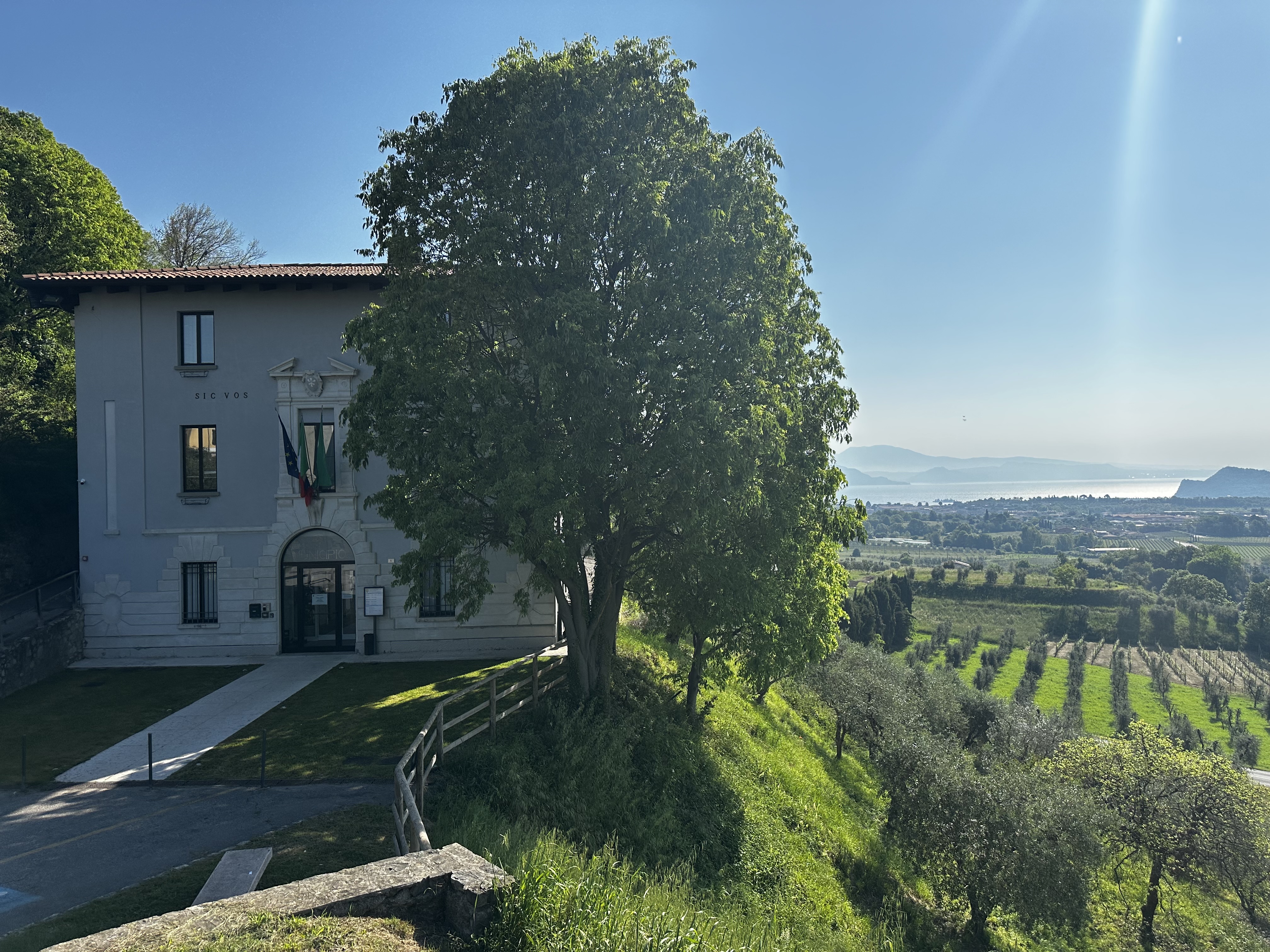
Looking for a quietcation on Lake Garda? Head to Valtenesi, where three hilltop villages — Soiano, Polpenazze and Puegnago — offer silence with a view, local wines, and authentic village life.
Up in the hills between Desenzano and Salò, in Valtenesi, there are three places you rarely find in guidebooks. Small, a little uneven, and shaped by the people who live there year-round. If you’re looking for silence with a view, real wine cellars, and piazzas where conversations still matter, this is where you stop.


Soiano del Lago
Soiano is the highest village in Valtenesi, perched at 198 meters above sea level with sweeping views of the lake and surrounding hills. At its heart stands the Castle of Soiano del Lago — a structure that dates back to the 10th century. Unlike the grand residences found elsewhere, this castle was built as a place of shelter and defense. It played a central role in the life of the community, hosting meetings and local assemblies throughout the Middle Ages.
During World War II, the bells in the 13th-century tower were carefully hidden to prevent them from being taken and melted down. Even now, the chimes of those bells mark important moments in village life. For centuries, a campanaro— or bell-ringer — was employed by the town to keep time and lived inside the castle itself. A handwritten record of his duties is still kept in the parish archive, a quiet testimony to how history lives on in small places.
Downhill, you’ll find Garda Golf, one of the most established golf clubs on Lake Garda, with 27 holes set among rolling fairways and framed by vineyards. In summer, the castle’s courtyard becomes a stage for concerts and open-air festivals organized by the Pro Loco Soiano del Lago. On Ferragosto (August 15, Italy’s midsummer holiday), the village gathers here for music and lights. This is followed by the feast of San Rocco, and later the celebration of Saint Michael, Soiano’s patron, held on the last Sunday of September.
The village of frescoes: Polpenazze del Garda

Polpenazze has a steep road, a sunny square, and a church that stands at the edge of it all. From the viewpoint beside it, you see rooftops, vineyards, and the lake just beyond.
It’s known as the village of frescoes — one for every tradition, painted on houses, corners, and façades. Spotting them all becomes a kind of treasure hunt, and a playful way to walk through the village. At the heart of it is Piazza Biolchi, between the castle and the church, opening out toward olive trees and the lake. Locals often meet here — and this is where I usually sit with a cone, looking out at the view. The square comes fully alive in May for the Fiera del Vino, a celebration of the area’s wine culture that dates back to 1947.


Even without an event you might pick up a gelato from Gelateria Vassalli (open all year round) and hands down it is the best ice cream around, definitely worth any detour and in summer time expect some queues. Bar Centrale, open from breakfast to aperitivo, is a solid stop just below the old castle.

Just outside the village, the archaeological site of Lucone di Polpenazze is part of a UNESCO World Heritage zone. The remains of ancient pile dwellings found here trace back to the earliest communities that once lived around the lake.
Puegnago del Garda

Puegnago has two sides: the panoramic views over Lake Garda and a wilder inland area that feels untouched. It spreads across soft hills, marked by olive groves and family-run wineries. The woods around the Sovenigo ponds bring back childhood memories — in the largest of these ponds, lotus flowers bloom in July and August, a quiet spectacle worth seeing. Walking through the roads of Mura, the vineyards of Raffa, and the olive groves in Picedo gives you a sense of place that’s still rooted in tradition. A good place to start is at one of the local olive oil mills — there are a few small family-run producers in and around the village where you can taste freshly pressed oil and learn more about the local harvest. Puegnago is also closely tied to Groppello, a native red grape variety of the Valtenesi area, producing light, aromatic wines that pair beautifully with local food. A glass of fresh wine in good company is often the best way to experience it all.
In Puegnago sul Garda, a must restaurant Casa Leali that has recently been awarded its first Michelin star. I’ve been — and it’s worth it. The food is refined and the whole experience feels deeply rooted in this part of the lake. It does get busy, so I recommend booking in advance.

Local Markets
In villages this small, weekly markets aren’t just for shopping — they’re part of how life moves. You’ll find locals greeting each other at the stalls, picking up seasonal fruit, chatting with fishmongers or grabbing a wedge of cheese for lunch. Each market reflects the scale and soul of its town:
• Soiano del Lago: every Friday morning in Piazza Don Vantini, with fresh produce, kitchen goods, and the occasional surprise from nearby artisans.
• Puegnago del Garda: also on Friday mornings, in Piazza Beato Don Giuseppe Baldo, with a strong local vibe and products grown nearby.
• Polpenazze del Garda: Saturday mornings in Piazza Zanardelli, with everything from vegetables to household goods — a slice of everyday life
Life here runs at a slower rhythm. Between markets, vineyards and old castles, these villages embody the essence of a Lake Garda quietcation